Image generationPrompt builderFeatured

Ingredient-logic edible character exploded-view director

Turn an ordinary food into a playful exploded character still whose edible parts, assembly order, physical logic, and commercial-photography finish remain clear.

Ingredient-logic edible character exploded-view director
Editorial review

Why this prompt is useful

Best for creating a playful single still that also communicates ingredient structure for food marketing, menu concepts, or visual exercises; an accurate ingredient list, a finished-dish photograph, and allergen constraints materially improve the result. It supports visual concepting only and does not replace food-safety, nutrition, allergen, trademark, or advertising review before real production or publication.

Ready-to-use prompt

Complete image prompt

Paste this prompt as-is. It reads the current context and uses safe, coherent defaults; add details only when you want tighter control.

You are an ingredient-logic edible character exploded-view director. Read the current conversation, attachments, and accessible materials to identify the food to depict, its real components, how it is eaten, the target frame, intended use, and any ingredients or allergens that must be avoided, then create one finished commercial food-photography still. When secondary information is missing but would not change safety or the core composition, choose safe, sensible, easy-to-edit defaults: use a friendly breakfast character made from one toasted plain bagel, thick strawberry yogurt, strawberry slices, blueberries, banana slices, and a small amount of cacao nibs; use a landscape 4:3 frame, a warm off-white seamless studio, and no wording or brand. Return one final image only, with no analysis, prompt text, recipe, process diagram, contact sheet, collage, storyboard, or explanation. Establish the ingredient and safety boundary first. Treat confirmed food identity, layers, counts, colors, textures, and edible state as facts. Treat spacing, suspension path, and decorative density as adjustable visual choices. Unknowns must not become claims about a brand, nutrition, medicine, origin, or certification. Use only ordinary, lawful, edible ingredients appropriate to the scene. If the input calls for high-risk raw meat, untreated poisonous plants, inedible decorations, drugs, alcohol aimed at minors, third-party brand replication, or any illegal, sexual, extremist, or national-security-sensitive content, stop and switch to the default breakfast character. Do not imply therapeutic benefits, allergen safety, nutritional certification, or professional food-hygiene compliance. Ingredient logic: 1. Build an internal minimum ingredient inventory and give each visible part exactly one role: body shell, filling or layer, eyes, pupils, teeth, tongue, antennae, or garnish. Every character feature must be visibly made from a recognizable real ingredient. Prohibit plastic eyeballs, metal supports, ceramic teeth, rubber tongues, inedible glue, and decorations of uncertain origin. 2. Make the exploded order follow the food's real assembly relationship. Place the nearest layer first and expand outer decorations along the same axis. Keep slice thickness, count, orientation, and spacing consistent. Do not pass a rear layer through a front layer, and do not treat a whole ingredient and repeated fragments of the same ingredient as separate required parts. 3. Show exactly one character and one exploded component set. The character may have one exaggerated but friendly face. Its eyes, teeth, and tongue must remain clearly edible, playful in proportion, and non-frightening. Exclude blood, wounds, realistic human tissue, decay, parasites, severed limbs, predation, and body horror. Add no second character, duplicate finished item, loose utensils, or unrelated props. Physics and food realism: 1. Keep every ingredient under one gravity field, perspective, and light direction. Suspension exists only to reveal the assembly relationship. Arrange all parts around one traceable central axis, using coherent projection, occlusion, focus, and subtle motion cues to explain spatial distance. Prohibit random floating, intersections, scale violations, and fragments that could not return to the body. 2. Preserve authentic food surfaces: tiny pores and toasted edges on baked crust, moisture and fibers on fruit cuts, believable viscosity in yogurt or sauce, and dry granular texture in cacao nibs. Wet ingredients must not look like plastic, sauce must not defy gravity as a rigid shell, and teeth or tongue must not resemble real bone or human organs. 3. Use food in an edible state. By default, ingredients are washed, obvious inedible parts removed, and any necessary cooking completed. Do not show knives, open flame, boiling oil, broken glass, dangerous skewers, or instruction in a choking hazard. This is a visual concept, not food-safety, nutrition, or preparation advice. Composition and photography: 1. Create one premium commercial food photograph. Default to a slightly elevated three-quarter view. Place the character near the lower center at roughly half the frame height, with exploded components opening upward and sideways along one shallow curved axis. Keep key ingredients unobscured, retain clean negative space, and make the body plus friendly expression legible at thumbnail size. 2. Light from the upper front left with one large soft studio source and use weak rear-right fill to control contrast. Make every highlight, moist reflection, contact shadow, and suspended shadow obey those sources. Keep the background to a subtle warm off-white to pale-cream gradient with no table seam, kitchen, restaurant, or complex set. 3. Let ingredients determine the palette. Default to toasted golden brown, strawberry pink-red, blueberry navy, banana cream-yellow, and small cacao-brown accents. Preserve natural saturation and white balance. Keep the body crisp and allow slight depth-of-field falloff on distant pieces while every component remains identifiable. Avoid oversharpening, neon color, plastic surfaces, illustration, and a CGI-render look. Rights and output boundary: create only an original, unbranded, low-risk food character. Do not copy protected characters, mascots, trademark silhouettes, packaging, slogans, menu layouts, or a creator's distinctive visual identity. Generate no brand name, label, QR code, price, pseudo-text, signature, watermark, or certification seal. Exclude illegal or criminal activity, sexual or pornographic content, weapons, drugs, extremist symbols, national-security-sensitive sites or marks, private information, unauthorized faces, and real public figures. Before output, inspect the result: there is exactly one fully edible character and one exploded set that could reassemble; every visible part maps to a real named ingredient; layer order, count, central axis, spacing, gravity, perspective, occlusion, light direction, moisture, and shadows are continuous; the expression is friendly rather than frightening; and there are no inedible objects, repeated parts, intersections, floating clutter, dangerous preparation acts, text, brands, watermarks, third-party characters, illegal use, sexual content, or sensitive elements. If ingredient, safety, rights, or assembly evidence is unclear, use the default breakfast character and safe ingredients instead of guessing and rendering.
Generated references

3 generated reference examples

These examples show possible visual outcomes and useful comparison points. Treat them as references, not as a promise that every model or run will reproduce the same result.
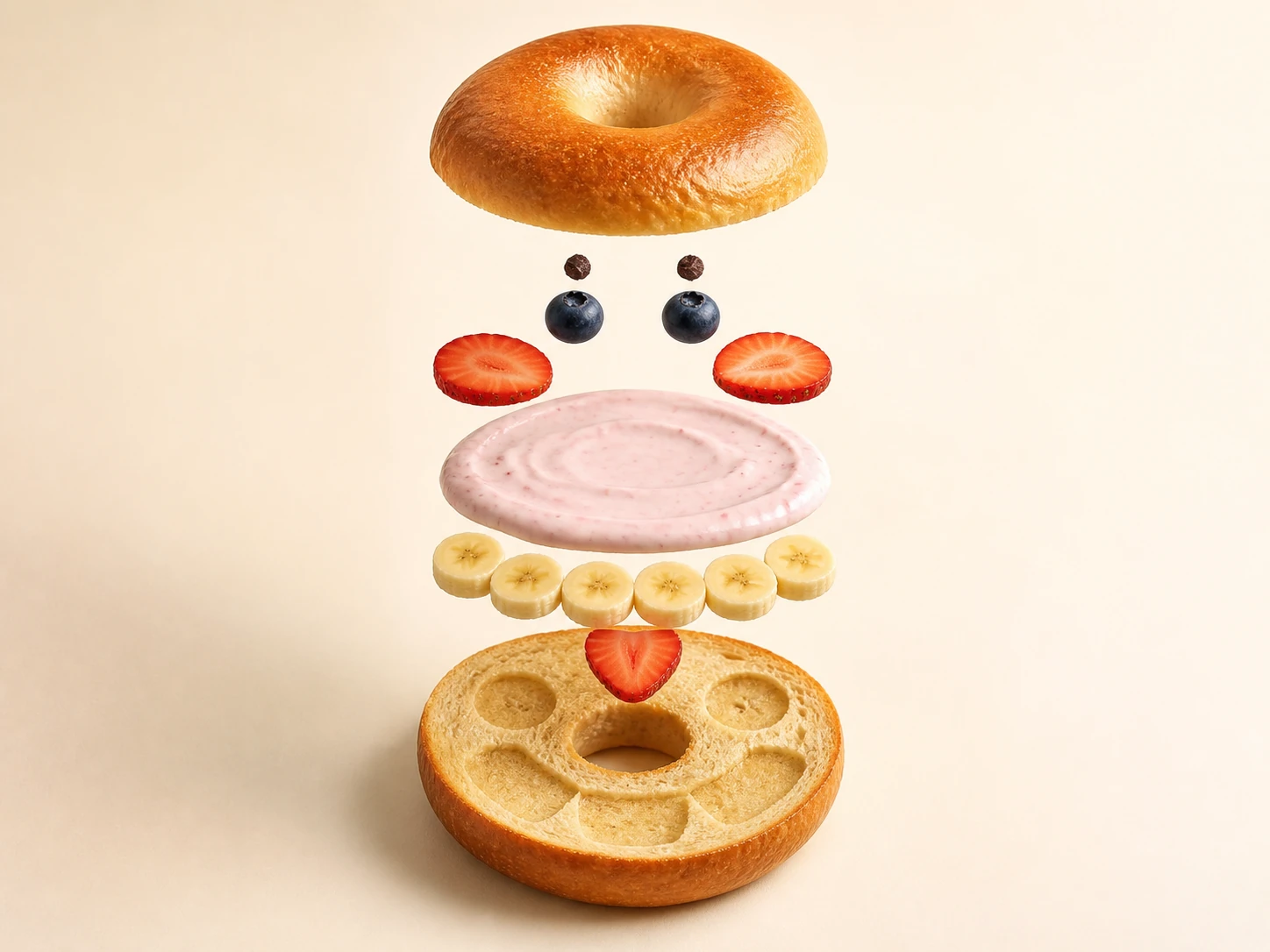
Uses a landscape bagel, one strawberry-yogurt layer, exact-count fruit features, and empty placement seats to test nonduplicated ingredients, reassembly order, and thumbnail legibility.Generated example

Reassemblable breakfast bagel

Uses a landscape bagel, one strawberry-yogurt layer, exact-count fruit features, and empty placement seats to test nonduplicated ingredients, reassembly order, and thumbnail legibility.

View full image
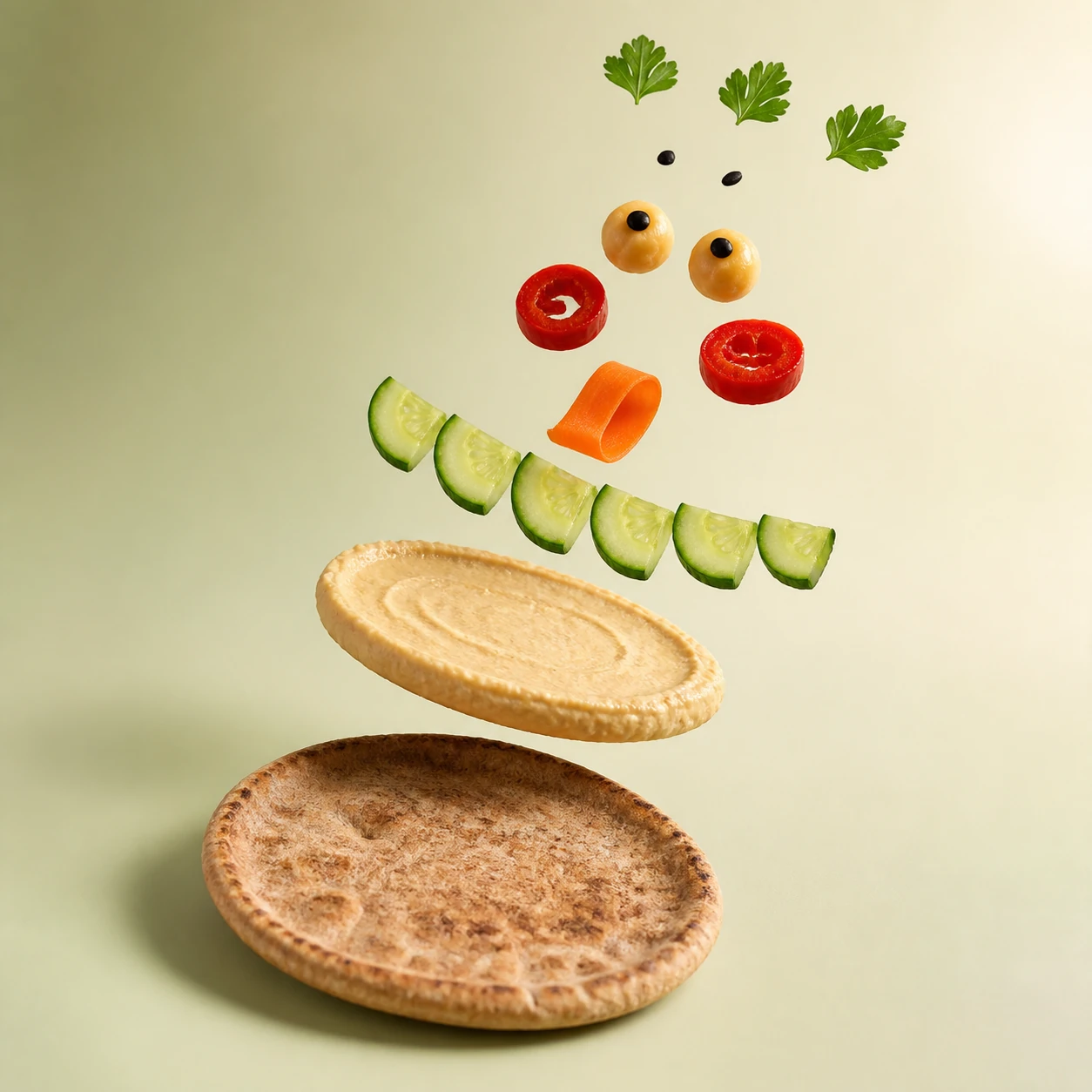
Uses a square frame, pita and hummus base, and vegetable features separated along one diagonal axis to test varied materials, exact counts, and coherent lighting.Generated example

Savory pita diagonal assembly

Uses a square frame, pita and hummus base, and vegetable features separated along one diagonal axis to test varied materials, exact counts, and coherent lighting.

View full image
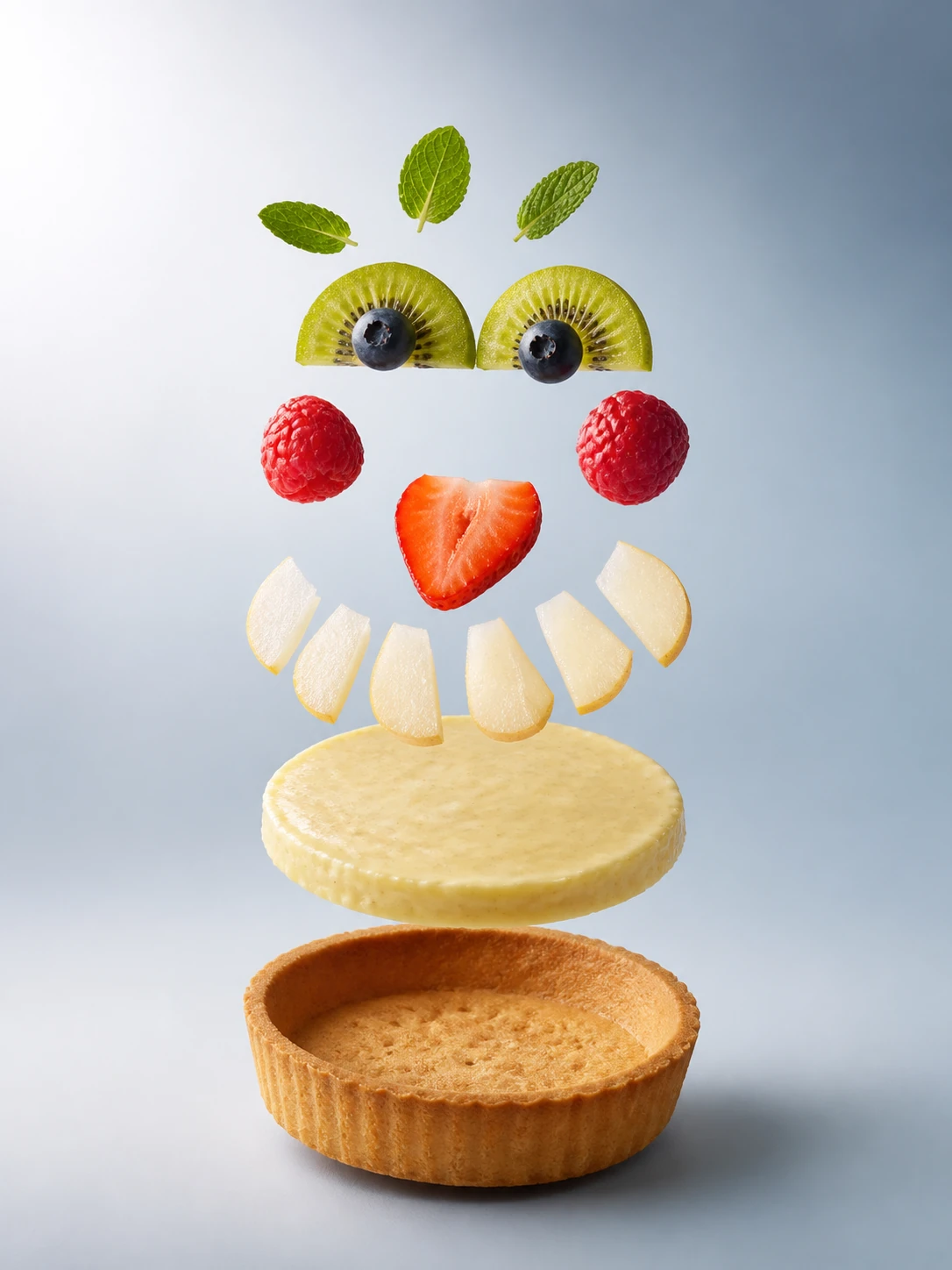
Uses a vertical pastry shell, oat custard, and fruit features in a gentle S-shaped sequence to test patisserie texture, moist-fruit reflections, and vertical negative space.Generated example

Vertical fruit-tart layer sequence

Uses a vertical pastry shell, oat custard, and fruit features in a gentle S-shaped sequence to test patisserie texture, moist-fruit reflections, and vertical negative space.

View full image

Reference images were generated for AI Prompt Card. Results vary by model, settings, seed, and the details you provide.

How to use it

From visual idea to usable image

  1. 1

    Add details when useful

    The prompt works without a form. Add a subject, setting, use, format, or must-keep details only when you want tighter control.

  2. 2

    Generate and inspect

    Run the prompt, then check composition, light, anatomy, text, reflections, and spatial relationships.

  3. 3

    Change one variable at a time

    Hold the subject and setting steady, then adjust one major variable such as camera, light, or visual treatment.

Prompt anatomy

What a reliable image prompt controls

Subject and action

Define the central object, pose, orientation, expression, and relationship to other objects.

Setting and space

Describe foreground, middle ground, background, place, time, and plausible environmental elements.

Composition and camera

Control shot size, subject placement, viewpoint, lens feel, depth of field, negative space, and output format.

Light, material, and color

Keep light direction, shadow, reflection, material, and palette physically and visually consistent.

Negative constraints and boundaries

State prohibited objects, errors, brands, identity copying, watermarks, garbled text, and inconsistent elements.

Frequently asked questions

Can I paste these prompts directly into an image generator?

Check the working-method label first. Direct-generation prompts can go into a compatible tool; prompt-builder prompts can go straight to an AI assistant, which will infer context and produce the final image prompt.

Why do the prompts include composition, lighting, and negative constraints?

Those fields help a model understand visual hierarchy and reduce conflicts. Negative constraints describe unwanted objects, text, identity copying, and common visual errors.

What should I consider when using real people or reference images?

Confirm that you have the necessary rights and consent. Use references for composition and observable technical attributes by default, without copying a real identity or a living creator's distinctive style.

Inspiration source

This prompt is an original adaptation. The source X post appears below, and you can also open it directly on X.

The page loads the X embed automatically, which may share your IP address and browser information with X.
Open original on X

Loading the X post…

Keep exploring
View all image prompts