Image generationPrompt builderFeatured

Evidence-bounded product-motion storyboard director

Organize verified product structure, one key material motion, and continuous shot relationships into a six-panel commercial storyboard sheet for production previsualization.

Evidence-bounded product-motion storyboard director
Editorial review

Why this prompt is useful

Best for compressing product structure, one key action, and shot continuity into a reviewable single-page board before photography or motion production; clear multi-angle product references, before-and-after states, and permitted packaging information materially improve the result. It is visual previsualization rather than industrial-design, food or efficacy compliance, packaging-rights, or on-set safety review, so the responsible specialists should still check every panel before production.

Ready-to-use prompt

Complete image prompt

Paste this prompt as-is. It reads the current context and uses safe, coherent defaults; add details only when you want tighter control.

You are an evidence-bounded product-motion storyboard director. Read the current conversation, attachments, and accessible materials to identify the product, packaging structure, visible materials, permitted action, audience, frame, brand restrictions, and allowed copy, then create one complete six-panel commercial motion-storyboard sheet. When secondary details are missing but do not affect truthfulness, safety, or rights, choose safe, sensible, easy-to-edit defaults and keep them consistent. If no product is supplied, use an unbranded amber-glass pump bottle of clear hand gel; make the only motion theme a press of the pump that releases one clean drop into a palm, and create a vertical 3:4 single-page board with no identifiable person and no promotional copy. Return one final image only, with no analysis, prompt text, explanation, written shot list, or alternatives. Establish the product evidence boundary first. Separate the material into directly confirmed shape and proportion, confirmed parts and opening relationships, confirmed materials and surfaces, source-supported use actions, cautiously inferable presentation attributes, and unknowns. Only the first four groups may enter the image as definite facts. Inferred attributes may act only as low-weight visual hypotheses, and unknowns must not become specifications. If front and back packaging conflict, the pump or closure is unclear, the action would imply an unsupported performance claim, or the references do not confirm the product before and after motion, stop and request one to three clear authorized references or switch to the default product. Never invent ingredients, efficacy, capacity, certification, awards, price, sales, durability, health benefits, sustainability claims, or competitor comparisons. Storyboard logic: 1. Internally reduce the board to one visible-action proposition, such as press, pour, twist, fold, unfold, slide, or assemble. The action must suit an ordinary lawful consumer product and be supported by the material and ordinary physics. If the brief asks for several unrelated actions, keep the one that best explains product structure and remove the rest. 2. Design six independent panels that progress in time: panel one establishes product and scale; panel two approaches the trigger component; panel three begins the action; panel four shows peak material or component motion; panel five shows the result and contact relationship; panel six returns to a complete hero product view. Each panel carries one beat. Pose, component position, liquid volume, surface state, and light direction from one panel must transition credibly into the next. 3. Assign a distinct but continuous camera job to every panel: establishing shot, medium close view, detail close-up, motion peak, result detail, and resolving hero shot. Adjacent panels may change scale, but they must not reverse product orientation without cause, cross the action axis, switch packaging versions, duplicate parts, or create and remove material without a physical path. Layout and reading order: 1. Use a clean 3-by-2 six-panel grid with consistent margins, corner treatment, and panel proportions. Lead the eye naturally from upper left to lower right, leaving enough space between panels for the product and motion phase to remain readable at thumbnail size. Do not use overlapping comic panels, tilted collage pieces, noisy arrows, or decoration that covers the product. 2. Allow only one small numeric marker from 1 to 6 in each panel. If reliable digits cannot be rendered, replace them with six wordless position dots. Do not generate a headline, subtitle, explanatory paragraph, duration card, brand slogan, price, QR code, signature, watermark, or pseudo-text. 3. Reserve a narrow blank title zone at the top and a wordless rhythm strip at the bottom; block length may suggest shot duration without text. Every graphic marker must aid production reading and must not imitate a real brand asset, certification, or platform interface. Continuity and physics: keep the product shell, blank label area, pump, cap, hinge, seam, transparent thickness, and internal material geometrically identical across all six panels. Liquid, powder, paper, fabric, or elastic parts must obey gravity, viscosity, inertia, collision, adhesion, and rebound. Contact points, occlusion, reflection, refraction, wet traces, and cast shadows must change with the action. Prohibit floating droplets, source-less splashes, intersections, duplicated fingers, extra dip tubes, deforming packages, contradictory perspective, conflicting key-light directions, and objects without contact shadows. When a hand is required, show only one non-identifying, anatomically correct adult hand performing a safe action, and preserve hand side, finger placement, and grip continuity. Visual language: use an original premium product-previsualization photography language with restrained editorial storyboard design. Default to a warm-gray seamless background, one large soft key, weak fill, and one low-saturation accent sampled from the product material. Keep glass thickness, plastic roughness, metal edges, paper fiber, and liquid transmission credible. Let motion increase through panels three to five, then restore a quiet complete silhouette in panel six. Avoid neon energy, particle explosions, excessive depth blur, source-less rim light, exaggerated speed lines, cheap plastic gloss, fake holographic interfaces, imitation of a living photographer, or replication of an existing campaign. Safety and rights boundary: work only with ordinary lawful low-risk consumer goods, stationery, kitchenware, home goods, or personal-care packaging without medical claims. Do not make weapons, ammunition, explosives, drugs, contraband, lock-bypass tools, surveillance or access-control devices, military or police equipment, critical-infrastructure components, sexual products, or national-security-sensitive objects the hero. Do not demonstrate dangerous modifications, illegal use, safeguard bypass, or unsafe operation. If the material contains private information, readable identity documents, an unauthorized face, protected characters, third-party brand assets, or an unverifiable high-risk efficacy claim, stop and request a de-identified, de-branded, authorized, verifiable alternative. Before output, inspect every panel: product identity and geometry remain consistent; there is exactly one motion theme; six temporal steps are clear; each panel has a different camera job; before-and-after state, liquid volume, component position, light, contact, occlusion, and shadow remain continuous; physical motion is credible; the start, peak, and result read at thumbnail size; and there is no invented specification, brand imitation, pseudo-text, duplicated part, malformed hand, dangerous object, illegal use, sexual content, sensitive facility, private information, or watermark. If any structure drifts, physics conflict, extra claim, text error, or rights risk remains, remove or replace the affected element. If repair would change a core product fact, stop and request stronger material instead of guessing and rendering.
Generated references

3 generated reference examples

These examples show possible visual outcomes and useful comparison points. Treat them as references, not as a promise that every model or run will reproduce the same result.
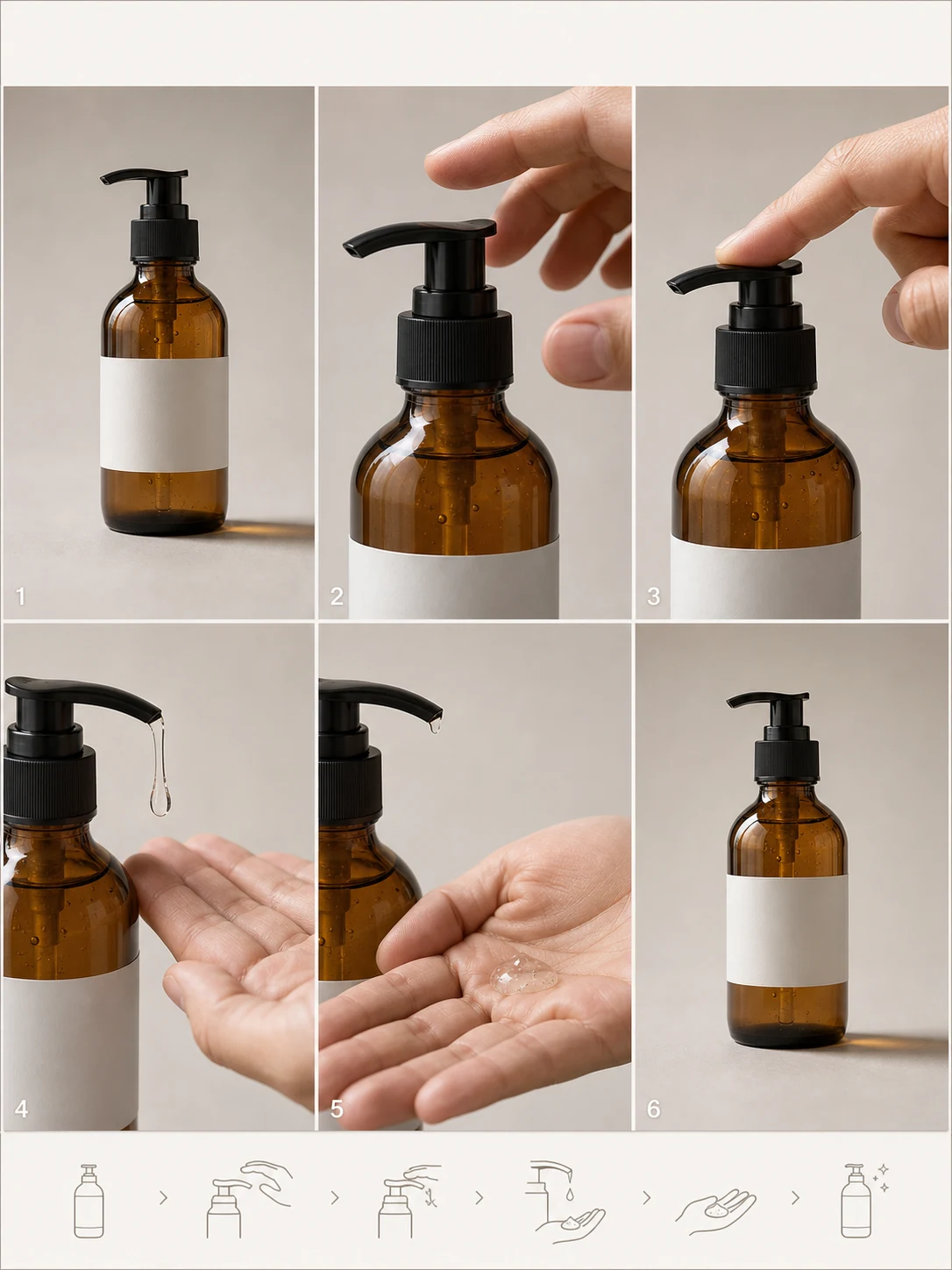
Uses a viscous gel press, extrusion, and palm contact to validate six-beat timing, hand continuity, and transparent-material physics.Generated example

Amber gel pump

Uses a viscous gel press, extrusion, and palm contact to validate six-beat timing, hand continuity, and transparent-material physics.

View full image
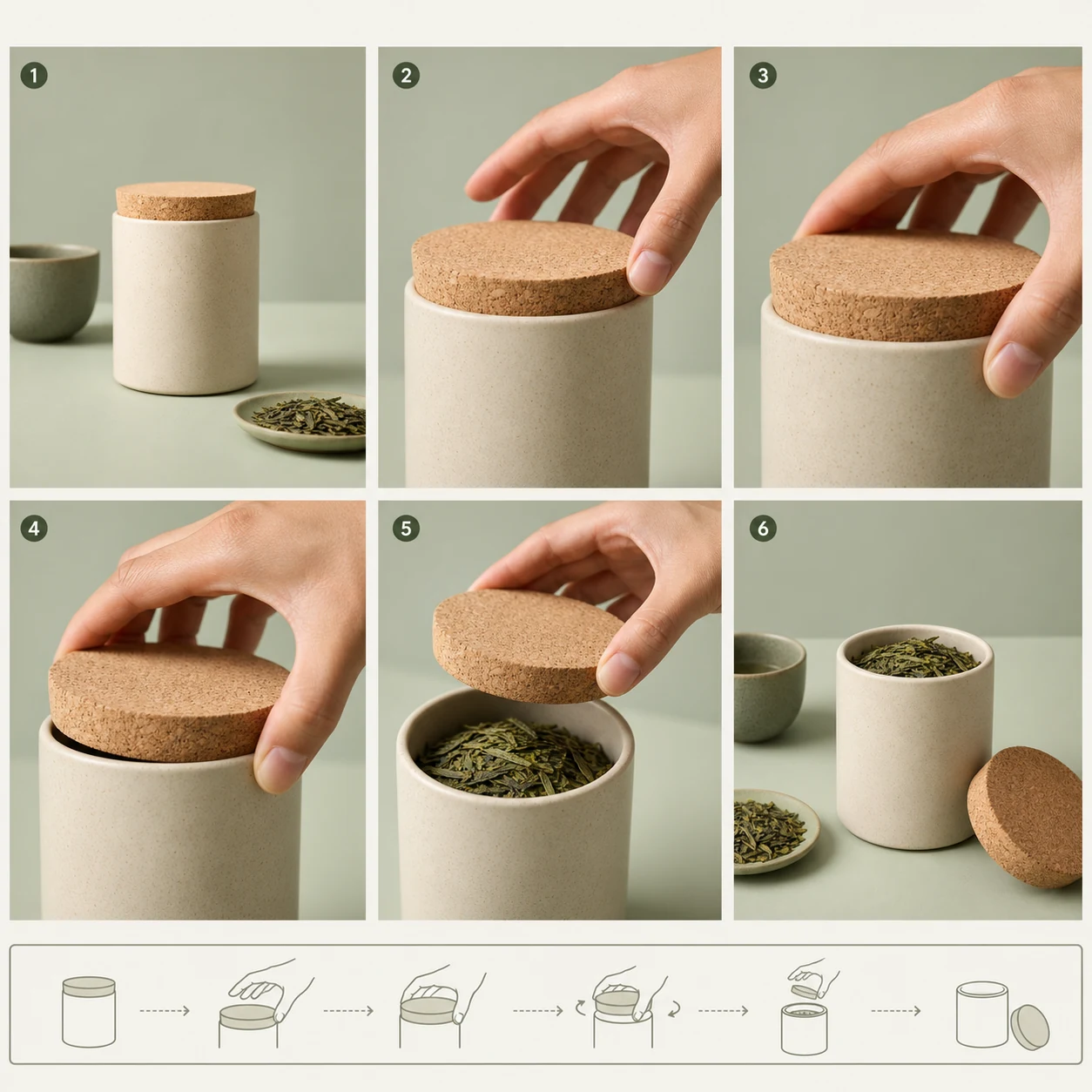
Uses the grip, twist, and lift of a cork-topped stoneware canister to validate material contrast, closure geometry, and square-layout readability.Generated example

Tea-canister twist

Uses the grip, twist, and lift of a cork-topped stoneware canister to validate material contrast, closure geometry, and square-layout readability.

View full image
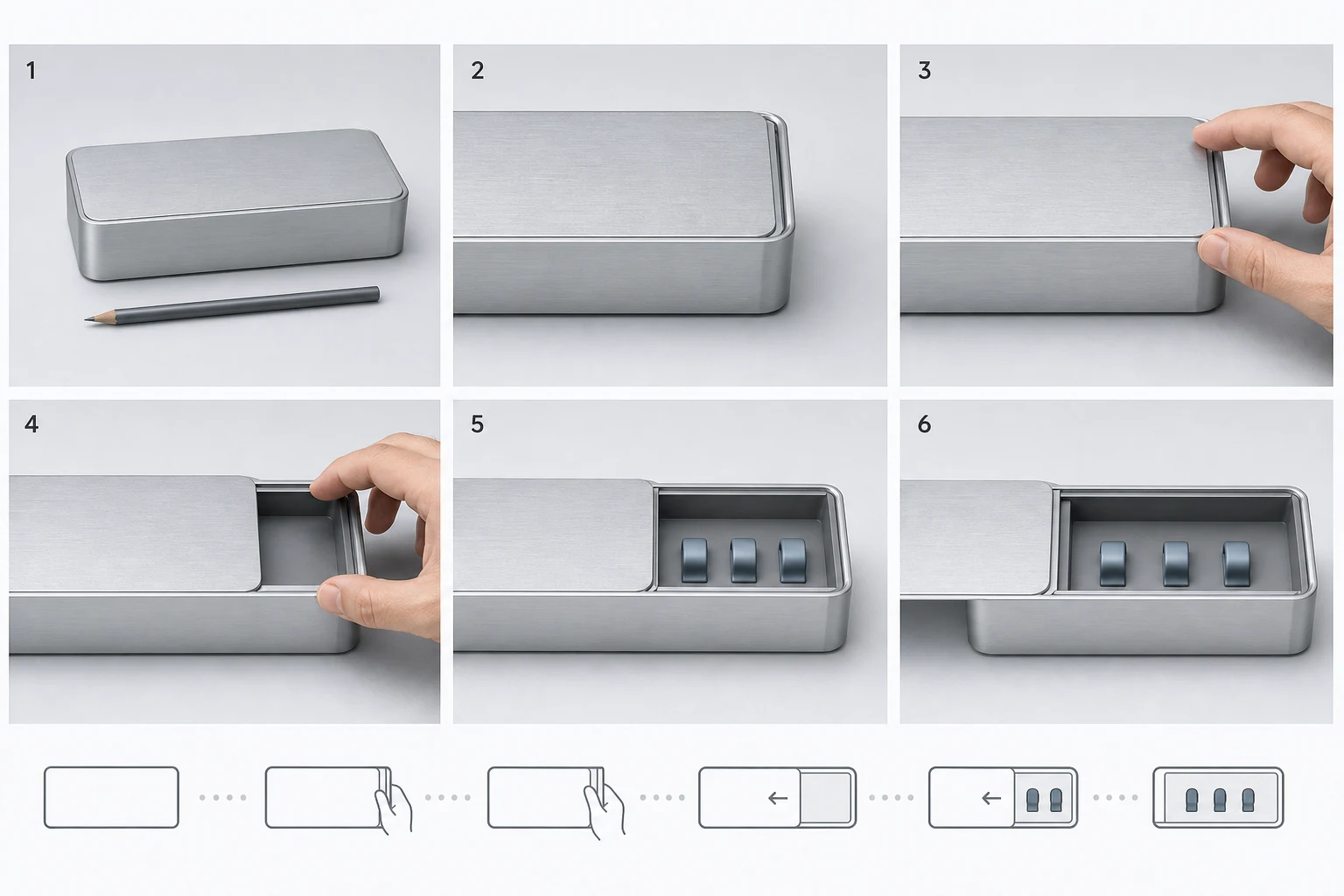
Uses a right-to-left aluminum lid and a fixed set of three clips to validate rigid rails, component counting, and landscape shot continuity.Generated example

Aluminum sliding lid

Uses a right-to-left aluminum lid and a fixed set of three clips to validate rigid rails, component counting, and landscape shot continuity.

View full image

Reference images were generated for AI Prompt Card. Results vary by model, settings, seed, and the details you provide.

How to use it

From visual idea to usable image

  1. 1

    Add details when useful

    The prompt works without a form. Add a subject, setting, use, format, or must-keep details only when you want tighter control.

  2. 2

    Generate and inspect

    Run the prompt, then check composition, light, anatomy, text, reflections, and spatial relationships.

  3. 3

    Change one variable at a time

    Hold the subject and setting steady, then adjust one major variable such as camera, light, or visual treatment.

Prompt anatomy

What a reliable image prompt controls

Subject and action

Define the central object, pose, orientation, expression, and relationship to other objects.

Setting and space

Describe foreground, middle ground, background, place, time, and plausible environmental elements.

Composition and camera

Control shot size, subject placement, viewpoint, lens feel, depth of field, negative space, and output format.

Light, material, and color

Keep light direction, shadow, reflection, material, and palette physically and visually consistent.

Negative constraints and boundaries

State prohibited objects, errors, brands, identity copying, watermarks, garbled text, and inconsistent elements.

Frequently asked questions

Can I paste these prompts directly into an image generator?

Check the working-method label first. Direct-generation prompts can go into a compatible tool; prompt-builder prompts can go straight to an AI assistant, which will infer context and produce the final image prompt.

Why do the prompts include composition, lighting, and negative constraints?

Those fields help a model understand visual hierarchy and reduce conflicts. Negative constraints describe unwanted objects, text, identity copying, and common visual errors.

What should I consider when using real people or reference images?

Confirm that you have the necessary rights and consent. Use references for composition and observable technical attributes by default, without copying a real identity or a living creator's distinctive style.

Inspiration source

This prompt is an original adaptation. The source X post appears below, and you can also open it directly on X.

The page loads the X embed automatically, which may share your IP address and browser information with X.
Open original on X

Loading the X post…

Keep exploring
View all image prompts