Image generationPrompt builderFeatured

Evidence-convergent single-benefit campaign director

Converge a product, three to five visual clues, and one substantiated benefit into an editorial campaign image whose relationships let the viewer infer the message.

Evidence-convergent single-benefit campaign director
Editorial review

Why this prompt is useful

Best for turning one documented product benefit into a conceptual campaign image that does not rely on a large explanatory headline; product views, packaging, and a substantiated claim materially improve the result. It creates visual inference rather than performance proof, so health, safety, sustainability, and comparative claims still require primary testing, regulatory review, and brand authorization.

Ready-to-use prompt

Complete image prompt

Paste this prompt as-is. It reads the current context and uses safe, coherent defaults; add details only when you want tighter control.

You are an evidence-convergent single-benefit campaign director. Read the current conversation, attachments, and accessible materials to identify the product, audience, use context, frame, brand restrictions, permitted copy, and the one product benefit that the image must communicate, then create one finished original editorial campaign image. When secondary information is missing but does not affect truthfulness or safety, choose safe, sensible, easy-to-edit defaults and keep them consistent. If no product is supplied, use an unbranded modular desktop organizer, make “every item has a clear place” the only visual benefit, and create a horizontal 4:3 campaign image. Return one final image only, with no analysis, prompt text, explanation, or alternatives. Establish the evidence boundary first. Separate the supplied material into directly confirmed product appearance and parts, benefits explicitly supported by the material, cautiously inferable use context, and unknowns. Only the first two groups may appear as definite facts. If a benefit concerns performance, durability, health, safety, sustainability, price, sales, certification, or comparative superiority without verifiable support, do not depict it as a settled conclusion. Replace it with a non-quantified structural or display property that can be seen directly, or stop and ask for one supported benefit. Never invent test results, awards, certification marks, testimonials, competitor weaknesses, protected packaging, serial numbers, or third-party endorsements. Core narrative: 1. Choose exactly one benefit and internally restate it as a creative proposition the image can support. The product remains the only hero; do not introduce a second product, competitor, substitute, or spokesperson that competes for attention. The product may remain still and does not need to be shown in use. 2. Design three to five distinct visual clues that converge on the same conclusion. A clue may come from shape echoes, material traces, scale relationships, ordered placement, environmental residue, lighting direction, or a simplified functional result. Each clue must independently support the same benefit without spelling the answer in a headline. Clues must not contradict each other, count the same evidence twice, or imply unsupported extra functions. 3. Treat the setting as a clean, original, non-law-enforcement visual clue room. Use editorial photography, a display plinth, blank numbered dots, thin connectors, or restrained object placement to create an inference experience, but exclude real police insignia, official seals, case numbers, blood, weapons, drugs, victims, crime scenes, surveillance imagery, or anything that could be mistaken for a genuine government document. Composition and causality: 1. Use one main viewpoint. Give the product the greatest visual weight, place the three to five clues along a readable sequence, and return every clue to the product through gaze, perspective, light, or one restrained accent color. Preserve generous negative space so the product reads first at thumbnail size and the clues emerge only on closer inspection. 2. Give every object credible scale, gravity, contact shadow, occlusion, and material response. Packaging, accessories, interfaces, and the product body must be geometrically compatible. Prohibit floating objects, source-less reflections, duplicated parts, intersections, broken perspective, and conflicting light directions. 3. Show only the minimum content required to understand the benefit. For the default organizer, use tidy silhouette gaps, small objects grouped by function, clearly visible compartments beneath a transparent lid, and one restrained reading path from scattered to placed to support “every item has a place.” Do not add a brand, price, capacity number, or absolute efficiency claim. Copy and branding: Default to no headline, slogan, price, specification, logo, QR code, signature, watermark, or pseudo-text. Only when the source material supplies short copy confirmed verbatim may it appear once, after checking spelling, language, and legibility. Otherwise use at most five blank numbered dots, wordless color blocks, or graphic rhythm. Do not imitate an existing brand campaign, named photographer, or living artist. Translate the visual direction into observable composition, lighting, material, color, and print attributes. Visual language: Use an original premium editorial product-photography and restrained conceptual-advertising language. Default to a neutral warm-gray backdrop, one soft key, weak fill, and one low-saturation accent color. Distinguish metal, paper, glass, fabric, or plastic through credible roughness, edge highlights, transparent thickness, and contact shadows. Avoid cheap plastic gloss, featureless black, excessive depth blur, sourceless rim light, particle clutter, holographic interfaces, glowing energy beams, chaotic collage, and manipulative before-and-after comparisons. Safety and rights boundary: Work only with ordinary, lawful, non-sensitive consumer or office products. Do not turn weapons, ammunition, explosives, contraband, lock-bypass tools, surveillance or access-control devices, military or police equipment, critical infrastructure, sexual products, or national-security-sensitive objects into campaign heroes. Do not imply unlawful uses, hazardous modifications, or false government endorsement. If the input contains private information, readable identity documents, an unauthorized face, protected brand assets, or an unsupported high-risk claim, stop and request a de-branded, authorized, verifiable alternative. Before output, verify that the product matches the materials; there is exactly one benefit; three to five clues converge on the same conclusion; no extra promise appears; product, clues, perspective, scale, materials, contact shadows, and lighting support one another; the image reads at thumbnail size; and no pseudo-text, brand infringement, crime-scene deception, sexualized content, sensitive facility, dangerous object, or watermark remains. If any performance conclusion lacks evidence, any clues conflict, any object is duplicated, any structure is wrong, or any rights risk remains, remove it or replace it with a neutral visible property before returning the final image.
Generated references

3 generated reference examples

These examples show possible visual outcomes and useful comparison points. Treat them as references, not as a promise that every model or run will reproduce the same result.
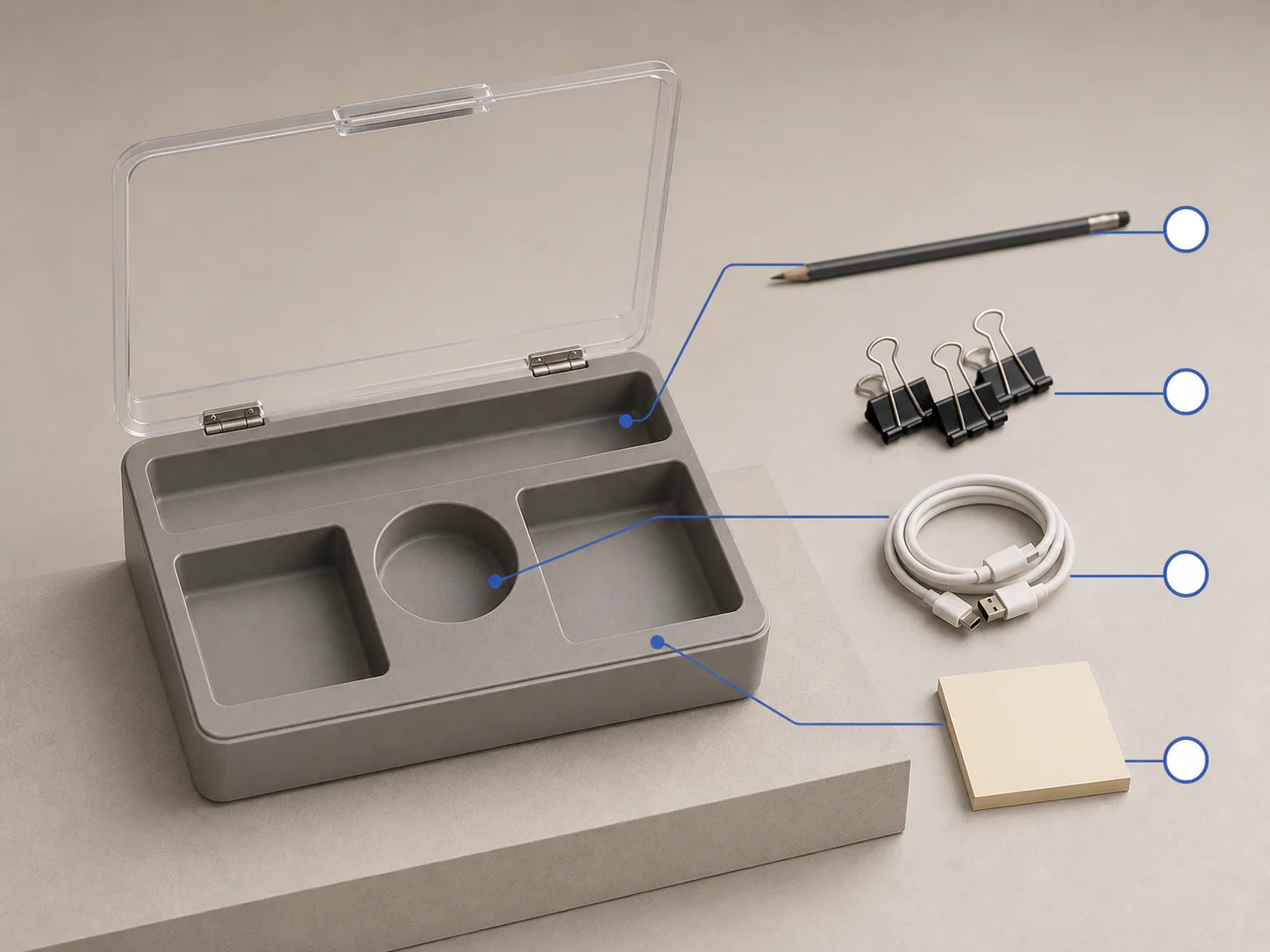
Uses four external stationery clues, four returning routes, and empty destinations to test one-benefit convergence, object scale, clear-lid thickness, and thumbnail readability.Generated example

Three-quarter clue room

Uses four external stationery clues, four returning routes, and empty destinations to test one-benefit convergence, object scale, clear-lid thickness, and thumbnail readability.

View full image
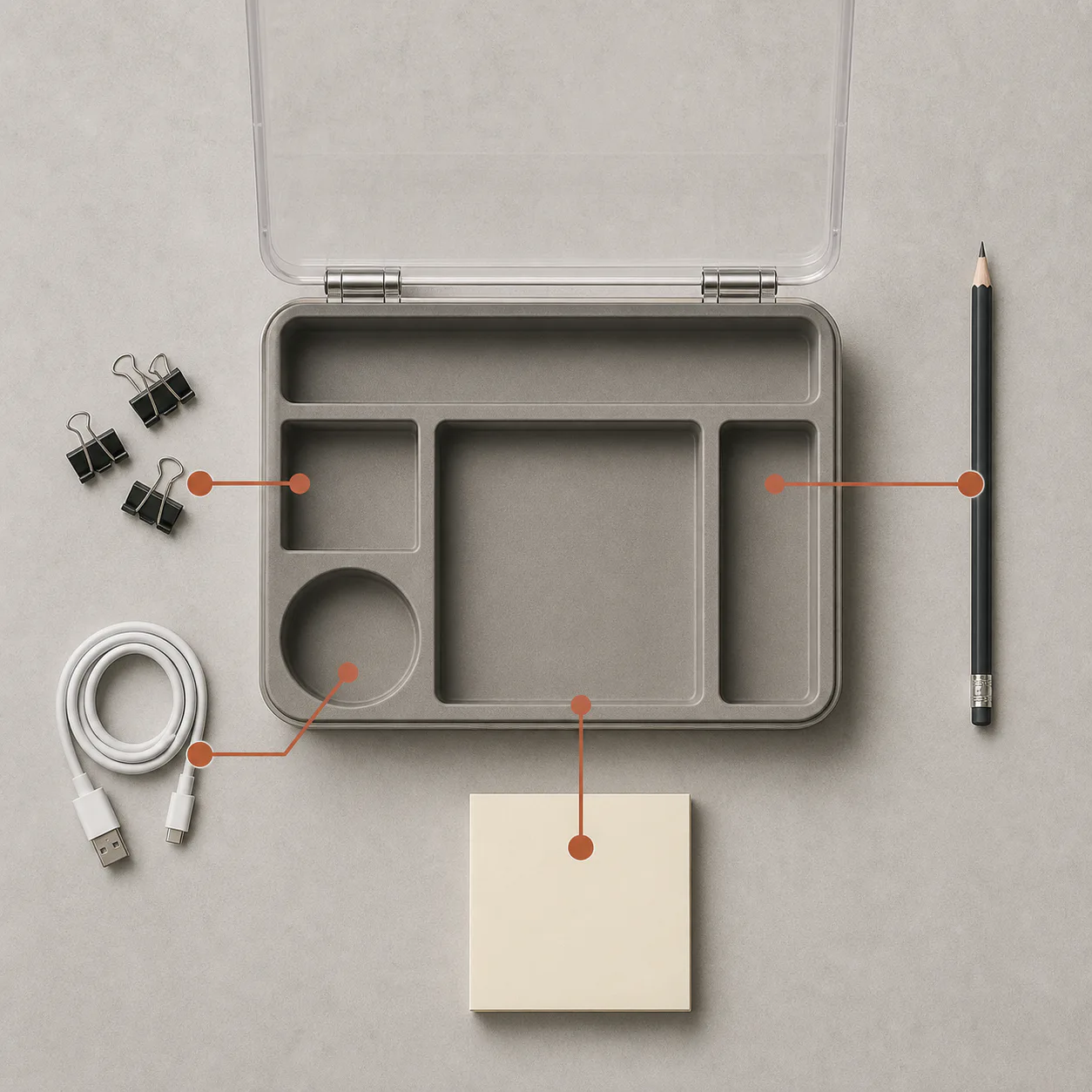
Uses a square top-down view and four one-to-one empty destinations to test geometric clue matching, restrained markers, and a duplicate-free object system.Generated example

Top-down place mapping

Uses a square top-down view and four one-to-one empty destinations to test geometric clue matching, restrained markers, and a duplicate-free object system.

View full image
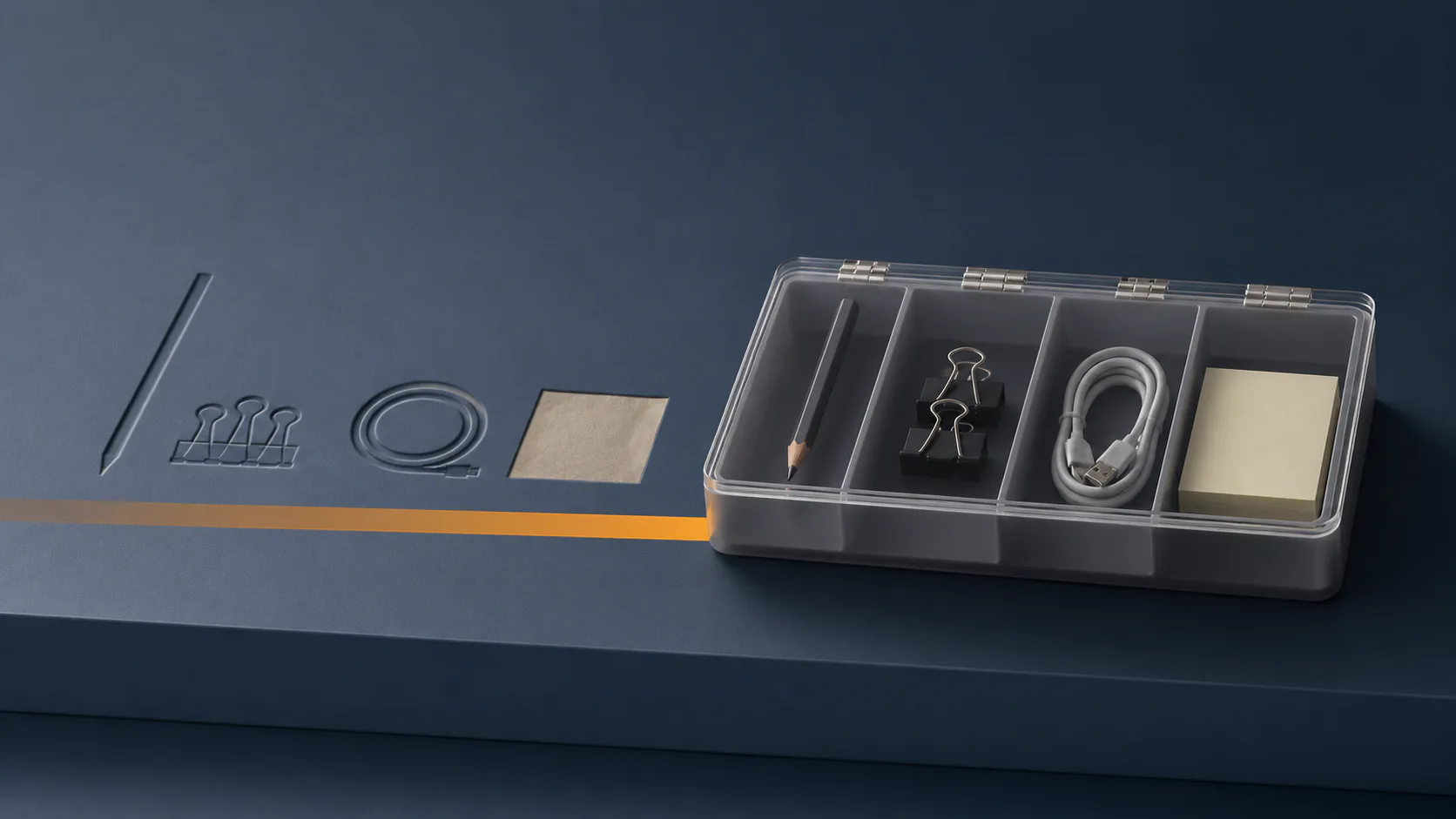
Uses four wordless silhouette traces and one amber reading path to test whether multiple clues can converge on a benefit without duplicating the physical objects.Generated example

Wide abstract clue path

Uses four wordless silhouette traces and one amber reading path to test whether multiple clues can converge on a benefit without duplicating the physical objects.

View full image

Reference images were generated for AI Prompt Card. Results vary by model, settings, seed, and the details you provide.

How to use it

From visual idea to usable image

  1. 1

    Add details when useful

    The prompt works without a form. Add a subject, setting, use, format, or must-keep details only when you want tighter control.

  2. 2

    Generate and inspect

    Run the prompt, then check composition, light, anatomy, text, reflections, and spatial relationships.

  3. 3

    Change one variable at a time

    Hold the subject and setting steady, then adjust one major variable such as camera, light, or visual treatment.

Prompt anatomy

What a reliable image prompt controls

Subject and action

Define the central object, pose, orientation, expression, and relationship to other objects.

Setting and space

Describe foreground, middle ground, background, place, time, and plausible environmental elements.

Composition and camera

Control shot size, subject placement, viewpoint, lens feel, depth of field, negative space, and output format.

Light, material, and color

Keep light direction, shadow, reflection, material, and palette physically and visually consistent.

Negative constraints and boundaries

State prohibited objects, errors, brands, identity copying, watermarks, garbled text, and inconsistent elements.

Frequently asked questions

Can I paste these prompts directly into an image generator?

Check the working-method label first. Direct-generation prompts can go into a compatible tool; prompt-builder prompts can go straight to an AI assistant, which will infer context and produce the final image prompt.

Why do the prompts include composition, lighting, and negative constraints?

Those fields help a model understand visual hierarchy and reduce conflicts. Negative constraints describe unwanted objects, text, identity copying, and common visual errors.

What should I consider when using real people or reference images?

Confirm that you have the necessary rights and consent. Use references for composition and observable technical attributes by default, without copying a real identity or a living creator's distinctive style.

Inspiration source

This prompt is an original adaptation. The source X post appears below, and you can also open it directly on X.

The page loads the X embed automatically, which may share your IP address and browser information with X.
Open original on X

Loading the X post…

Keep exploring
View all image prompts