Image generationDirect generationFeatured

Conflict-free visual intent director

Turn style, visible scene details, and failure-critical constraints into one conflict-free visual intent and a coherent 4:5 editorial still.

Conflict-free visual intent director
Editorial review

Why this prompt is useful

Use this when the visual direction is known but style words and constraints compete with one another. Concrete visible relationships produce stronger results; still review rights, text, perspective, and material consistency after generation.

Copyable template

Complete image prompt

Replace the bracketed placeholders first, then adapt parameters for your tool. Do not invent missing dimensions, rights, or identity details.

Act as an original visual-intent director. Use the three-part brief below to create one finished 4:5 vertical editorial image. Resolve requirements that compete for visual control internally before generation, and return only the final image without explaining the analysis. Inputs: - Style attributes: {visible medium, period character, surface treatment, color relationship, and mood; do not name a living artist} - Visible scene: {original subject, environment, action or placement, composition, light, and essential materials} - Failure-critical constraints: {three to six requirements whose failure would invalidate the image} - Intended use: {cover, poster, product story image, or editorial illustration} Execution rules: 1. Rights and safety: use only original fictional subjects, ordinary objects, or material the user is clearly authorized to use. Do not imitate a real person's identity, a public figure, a protected character, a brand mark, or a living artist's recognizable style. Substitute an original unbranded solution when rights are uncertain. 2. Conflict resolution: inspect style, lighting, lens language, materials, period, and mood for contradictions. Give each conflict one primary direction and one restrained supporting direction. Preserve subject legibility, intended use, and failure-critical constraints instead of averaging conflicts by adding more adjectives. 3. Subject hierarchy: keep one unmistakable hero that remains readable at thumbnail size. Make the environment, props, and decoration support it. Borders, patterns, haze, and highlights must not become the visual center. 4. Composition: use clear depth or controlled negative space, with believable perspective, scale, contact, and cropping. If no camera view is supplied, choose a credible editorial viewpoint without inventing camera brands or decorative technical parameters. 5. Light, color, and material: use one primary lighting logic and no more than one supporting logic. Keep shadow direction, reflections, roughness, and material behavior consistent. Limit accent colors and reject combinations that simultaneously demand incompatible cinematic, misty, hard-neon, and hyper-sharp treatments. 6. Text and marks: unless the input supplies short copy that must be rendered verbatim, include no readable text. Add no trademark, random letters, signature, watermark, or counterfeit packaging. 7. Final check: verify the hero, composition, key light, materials, and every failure-critical constraint. If two requirements cannot coexist, preserve the higher-priority one and remove the lower-priority decoration rather than producing a collage-like compromise. Avoid minors, sexual content or nudity, gore, injury, illegal activity, political or military insignia, weapons, real-person impersonation, protected characters, trademarks, extra subjects, duplicated objects, broken perspective, floating contact, contradictory shadows, plastic surfaces, excessive decoration, random lettering, watermarks, grids, and step collages. Return one finished image only, not a contact sheet, prompt explanation, before-and-after comparison, or multiple variants.
Generated references

3 generated reference examples

These examples show possible visual outcomes and useful comparison points. Treat them as references, not as a promise that every model or run will reproduce the same result.
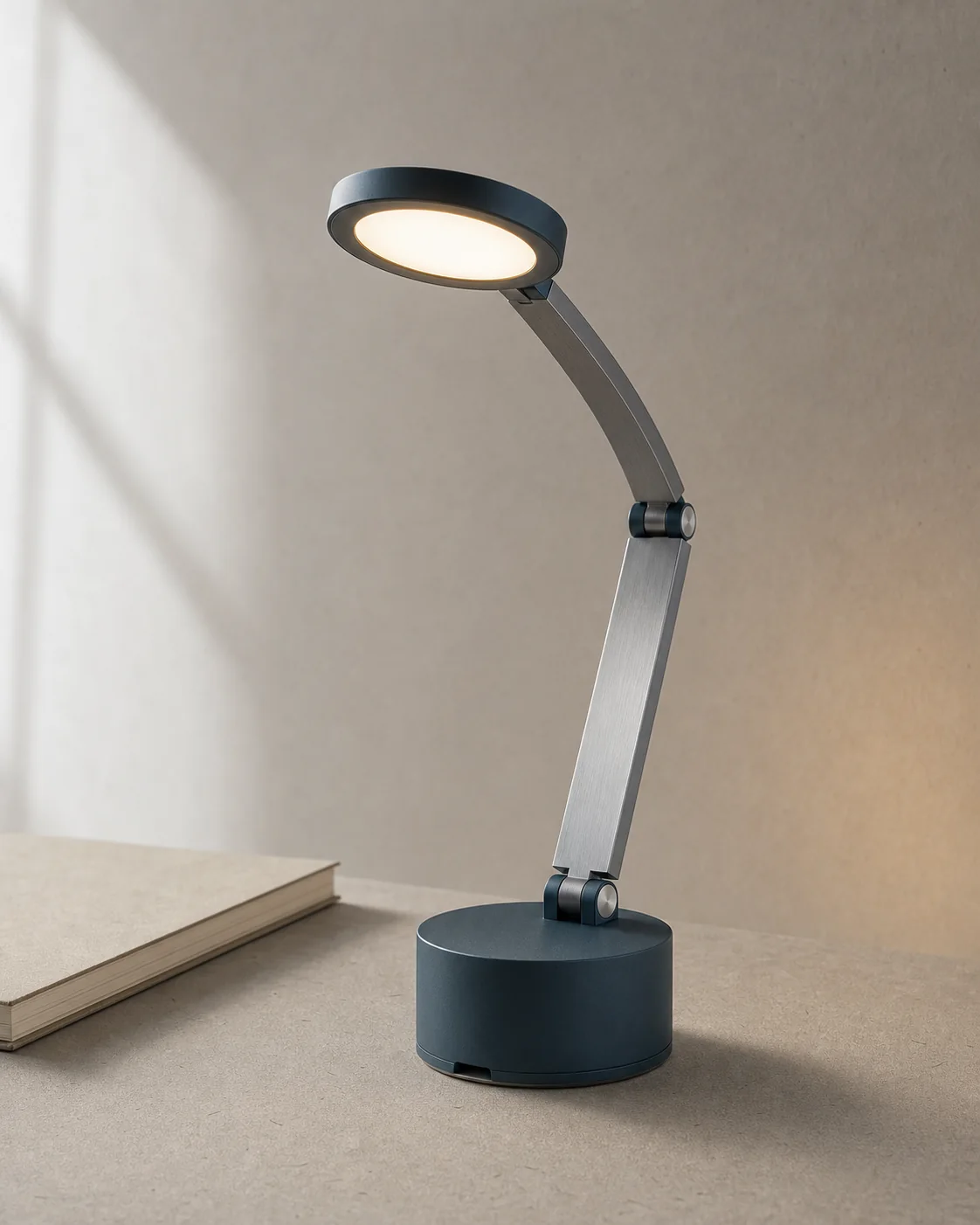
Validates a single hero, plausible folding joints, one soft northern key, and restrained warm reflection that remain clear at thumbnail size.Generated example

Soft-window baseline lamp

Validates a single hero, plausible folding joints, one soft northern key, and restrained warm reflection that remain clear at thumbnail size.

View full image
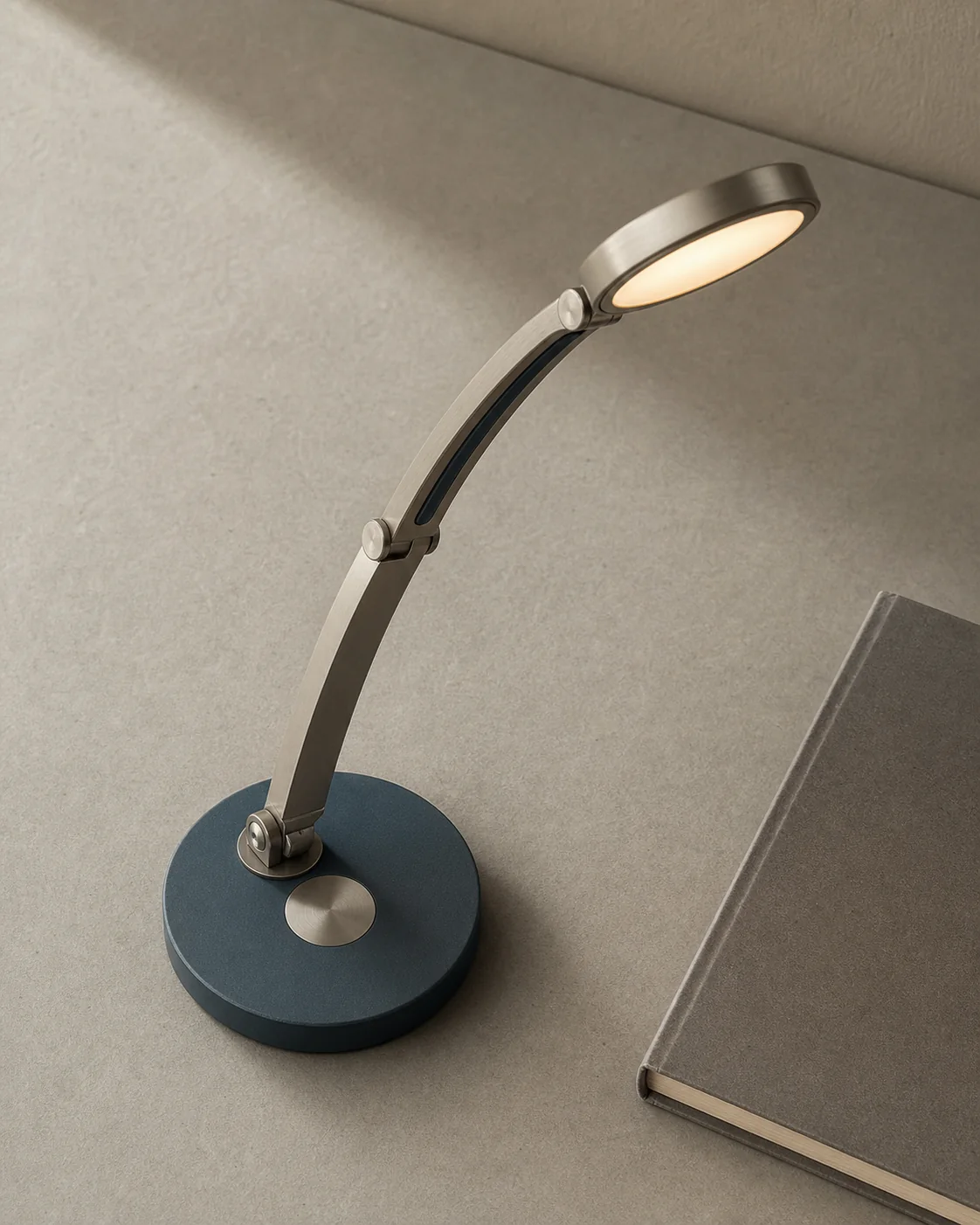
Validates that changing only to a high-angle diagonal composition preserves the complete subject, contact, materials, and original lighting logic.Generated example

Diagonal high-angle lamp

Validates that changing only to a high-angle diagonal composition preserves the complete subject, contact, materials, and original lighting logic.

View full image
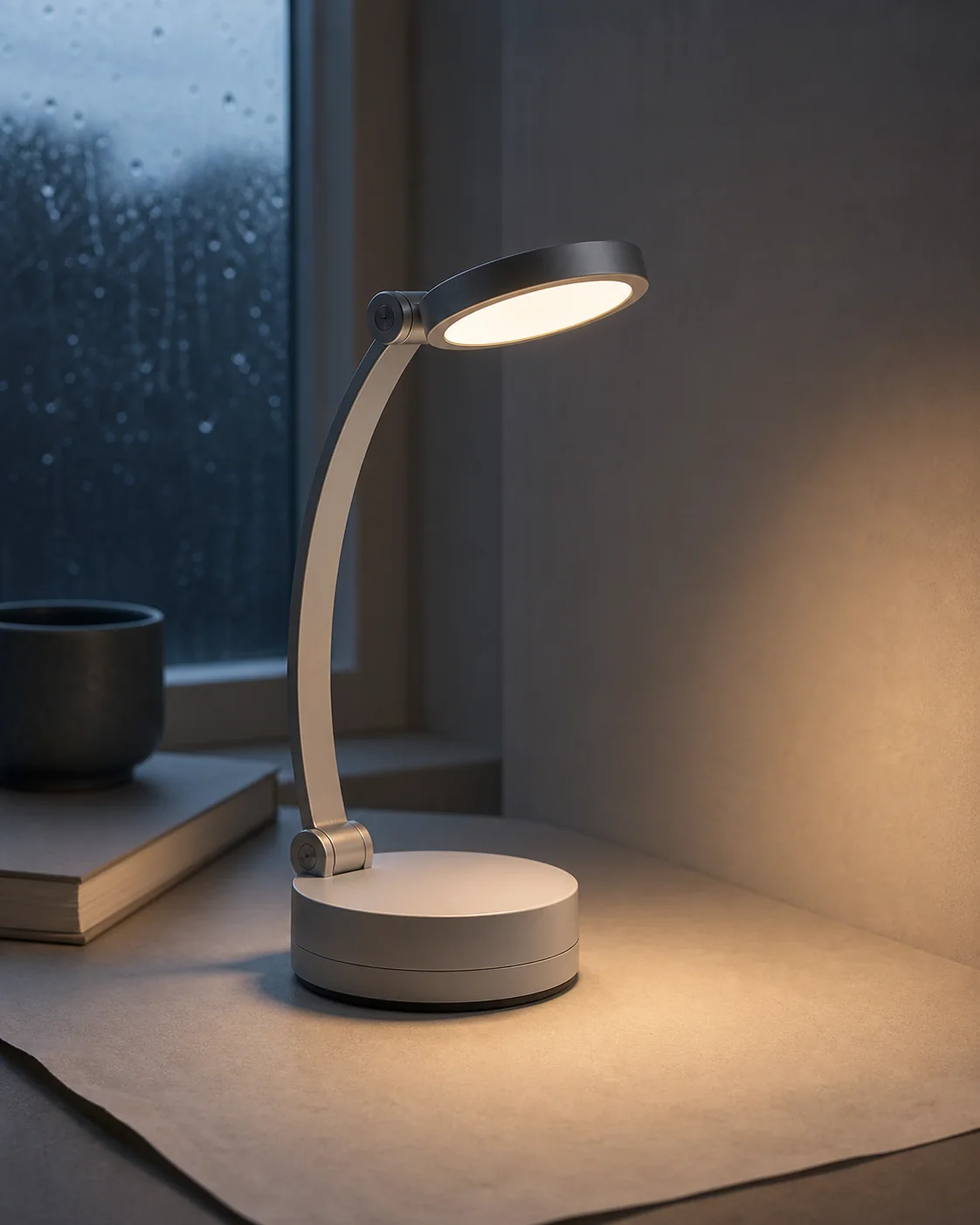
Validates a cool rainy-window key with restrained warm lamp fill, coherent shadows, and the product as the only visual center.Generated example

Rainy-dusk dual-temperature lamp

Validates a cool rainy-window key with restrained warm lamp fill, coherent shadows, and the product as the only visual center.

View full image

Reference images were generated for AI Prompt Card. Results vary by model, settings, seed, and the details you provide.

How to use it

From visual idea to usable image

  1. 1

    Complete the visual inputs

    State the subject, setting, use, format, and details that must remain or must not appear.

  2. 2

    Generate and inspect

    Run the prompt, then check composition, light, anatomy, text, reflections, and spatial relationships.

  3. 3

    Change one variable at a time

    Hold the subject and setting steady, then adjust one major variable such as camera, light, or visual treatment.

Prompt anatomy

What a reliable image prompt controls

Subject and action

Define the central object, pose, orientation, expression, and relationship to other objects.

Setting and space

Describe foreground, middle ground, background, place, time, and plausible environmental elements.

Composition and camera

Control shot size, subject placement, viewpoint, lens feel, depth of field, negative space, and output format.

Light, material, and color

Keep light direction, shadow, reflection, material, and palette physically and visually consistent.

Negative constraints and boundaries

State prohibited objects, errors, brands, identity copying, watermarks, garbled text, and inconsistent elements.

Frequently asked questions

Can I paste these prompts directly into an image generator?

Check the working-method label first. Direct-generation prompts can go into a compatible tool; prompt-builder templates should be completed in an AI assistant to produce the final image prompt.

Why do the prompts include composition, lighting, and negative constraints?

Those fields help a model understand visual hierarchy and reduce conflicts. Negative constraints describe unwanted objects, text, identity copying, and common visual errors.

What should I consider when using real people or reference images?

Confirm that you have the necessary rights and consent. Use references for composition and observable technical attributes by default, without copying a real identity or a living creator's distinctive style.

Inspiration source

This prompt is an original adaptation. The source X post appears below, and you can also open it directly on X.

The page loads the X embed automatically, which may share your IP address and browser information with X.
Open original on X

Loading the X post…

Keep exploring
View all image prompts