Image generationDirect generationFeatured

Concept-physics visual token director

Translate one original concept token into a visible, coherent, repeatable law of the scene while locking the subject, composition, and medium so the token's effect can be compared clearly.

Concept-physics visual token director
Editorial review

Why this prompt is useful

Use this to test controlled variations of one subject under different original world rules or to explore a visual concept. Define what changes and what stays fixed in a testable sentence; still review the result for physical continuity, accidental text, and asset rights.

Copyable template

Complete image prompt

Replace the bracketed placeholders first, then adapt parameters for your tool. Do not invent missing dimensions, rights, or identity details.

Act as a concept-physics visual director. Translate one original concept token into a complete still image. The token is not text placed in the frame or a loose style adjective; it is a fictional law that can be observed consistently across the subject, environment, and light. Return only the finished image, with no explanation, steps, comparison panel, or prompt text. Inputs: - Core subject: {one original object, creature, structure, or non-human character} - Baseline scene: {place, time, weather, and spatial relationships} - Concept token: {an original word or short phrase describing a fictional rule of time, gravity, echo, memory, growth, or another phenomenon} - Token meaning: {one sentence defining what the rule changes and what it does not change} - Locked controls: {subject, composition, lens, medium, palette, or ratio that must remain fixed} - Visual medium: {photography, printmaking, ceramic, paper cut, tactile illustration, or another concrete medium} - Format and use: {aspect ratio, thumbnail, poster, concept sheet, or another use} - Exclusions: {objects, effects, text, or risks that must not appear} Execution rules: 1. Internally convert the token into a testable causal sentence: “When {condition} occurs, {visible change} acts on {target}, while {locked control} remains unchanged.” If the input is ambiguous, choose the most conservative interpretation that can be verified visually. Do not invent identities, brands, or plot. 2. Express the same rule at three scales: one primary piece of evidence on the subject, one secondary response in the nearby environment, and one subtle ambient clue through light, grain, mist, shadow, or surface traces. All three must share one direction, time, and material logic rather than looking like unrelated effects. 3. Treat the locked controls as the control group. Do not change the number or basic silhouette of the core subject, camera position, main composition, medium, or specified palette. Let the token alter only the variables permitted by its meaning. If the token conflicts with a lock, preserve the lock and reduce the token effect. 4. Build a clear focal point and foreground, middle-ground, and background relationship. The primary evidence must read at thumbnail size, the secondary evidence at medium size, and the ambient clue only on close inspection. Do not cover every region with glow, debris, mist, or particles. 5. Preserve physical consistency in contact points, reflections, occlusion, gravity, shadows, material thickness, scale, and depth of field. The law may be fictional, but its consequences must obey one stable rule. 6. Use only original, generic, or explicitly authorized subjects and assets. Do not imitate a living creator or reproduce brands, trademarks, protected characters, real people, or public figures. Do not include political or military symbols, weapons, injury, illegal activity, sexual content, nudity, or dangerous procedures. Replace anything with unclear provenance or permission with an original non-person symbol. 7. Render no token, title, explanation, label, or other text inside the image. Before finishing, inspect subject integrity, causal readability, locked controls, light direction, contact relationships, material continuity, edge artifacts, duplicate objects, extra limbs, random text, logos, and watermarks. Avoid multi-panel layouts, before-and-after grids, contact sheets, prompt screenshots, random text, token typography, logos, watermarks, signatures, branded packaging, protected characters, real people, public figures, political or military symbols, weapons, injury, illegal activity, sexual content, nudity, causally unrelated effect stacking, excessive glow, conflicting light, arbitrary floating debris, plastic-looking materials, repeated subjects, broken structures, weak focus, and low clarity. Return one polished, text-free still image with a clearly readable fictional law.
Generated references

3 generated reference examples

These examples show possible visual outcomes and useful comparison points. Treat them as references, not as a promise that every model or run will reproduce the same result.

Uses three fading ceramic time echoes, offset basin ripples, and receding shadows to validate one rule expressed consistently at three scales.Generated example

Echo Bloom

Uses three fading ceramic time echoes, offset basin ripples, and receding shadows to validate one rule expressed consistently at three scales.

View full image
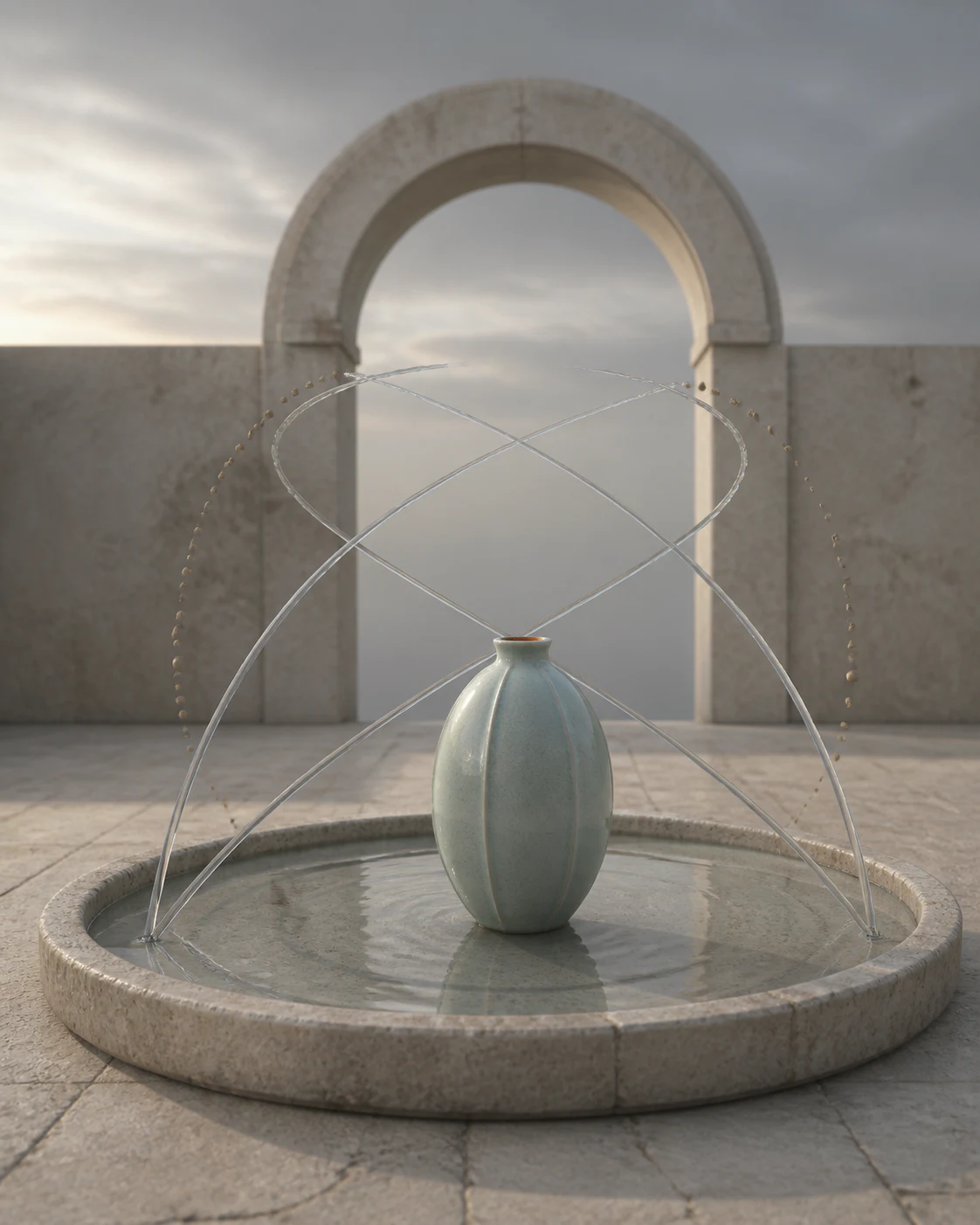
Uses two interlaced water lines returning to the basin, aligned grains, and a bent shadow to validate a narrow gravity field around a locked subject.Generated example

Gravity Lace

Uses two interlaced water lines returning to the basin, aligned grains, and a bent shadow to validate a narrow gravity field around a locked subject.

View full image
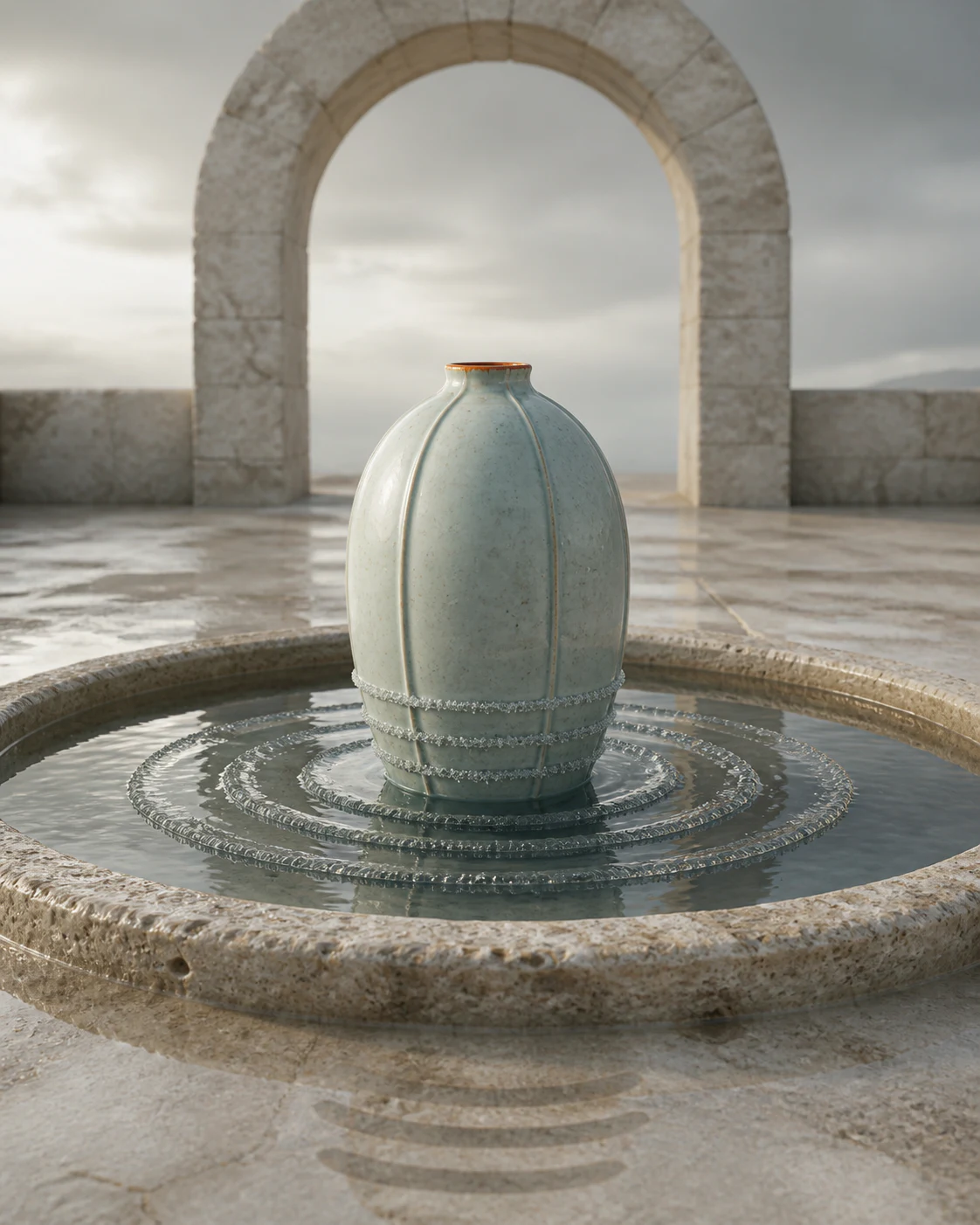
Uses three frost bands, crystallized ripples, and sequential shadow marks to validate slowed time recorded as continuous boundaries.Generated example

Time Frost

Uses three frost bands, crystallized ripples, and sequential shadow marks to validate slowed time recorded as continuous boundaries.

View full image

Reference images were generated for AI Prompt Card. Results vary by model, settings, seed, and the details you provide.

How to use it

From visual idea to usable image

  1. 1

    Complete the visual inputs

    State the subject, setting, use, format, and details that must remain or must not appear.

  2. 2

    Generate and inspect

    Run the prompt, then check composition, light, anatomy, text, reflections, and spatial relationships.

  3. 3

    Change one variable at a time

    Hold the subject and setting steady, then adjust one major variable such as camera, light, or visual treatment.

Prompt anatomy

What a reliable image prompt controls

Subject and action

Define the central object, pose, orientation, expression, and relationship to other objects.

Setting and space

Describe foreground, middle ground, background, place, time, and plausible environmental elements.

Composition and camera

Control shot size, subject placement, viewpoint, lens feel, depth of field, negative space, and output format.

Light, material, and color

Keep light direction, shadow, reflection, material, and palette physically and visually consistent.

Negative constraints and boundaries

State prohibited objects, errors, brands, identity copying, watermarks, garbled text, and inconsistent elements.

Frequently asked questions

Can I paste these prompts directly into an image generator?

Check the working-method label first. Direct-generation prompts can go into a compatible tool; prompt-builder templates should be completed in an AI assistant to produce the final image prompt.

Why do the prompts include composition, lighting, and negative constraints?

Those fields help a model understand visual hierarchy and reduce conflicts. Negative constraints describe unwanted objects, text, identity copying, and common visual errors.

What should I consider when using real people or reference images?

Confirm that you have the necessary rights and consent. Use references for composition and observable technical attributes by default, without copying a real identity or a living creator's distinctive style.

Inspiration source

This prompt is an original adaptation. The source X post appears below, and you can also open it directly on X.

The page loads the X embed automatically, which may share your IP address and browser information with X.
Open original on X

Loading the X post…

Keep exploring
View all image prompts