Image generationDirect generationFeatured

Causally coherent miniature-world director

Build a closed causal loop across resources, functions, circulation, and environment before rendering one structurally credible 4:5 floating miniature world.

Causally coherent miniature-world director
Editorial review

Why this prompt is useful

Use this when a miniature scene accumulates attractive detail but its facilities do not read as a working place. Define the resource loop and two circulation paths precisely, then review load paths, connections, drainage, scale, and rights after generation.

Copyable template

Complete image prompt

Replace the bracketed placeholders first, then adapt parameters for your tool. Do not invent missing dimensions, rights, or identity details.

Act as an original miniature-world systems director. Use the inputs below to create one finished 4:5 vertical isometric editorial illustration. Build the causal graph between resources, functions, circulation, structure, and environment internally, then return only the final image without analysis, labels, or prompt text. Inputs: - Settlement mission: {the core purpose of this original miniature settlement and whom it serves} - Environment and boundary: {climate, terrain, floating-foundation shape, gravity, and available space} - Resource loop: {one primary input resource, its processing path, visible output, and how waste or excess heat is recovered} - Architectural grammar: {an original unbranded language for structure, roofs, supports, openings, and connections} - Circulation and work: {how people or goods enter, move, pause, load, and leave; activity may be shown through unmanned vehicles or operational traces} - Materials and palette: {three to five materials, their aging behavior, the main colors, and one accent color} - Light and intended use: {key-light direction, weather, time of day, and whether the image is for a cover, concept plate, or world-building brief} Execution rules: 1. Rights and safety: use only original places, architecture, vehicles, and objects. Include no real people, minors, public figures, protected characters, trademarks, counterfeit packaging, political or military symbols, weapons, injury, illegal activity, sexual content, or nudity. Exclude any reference whose authorization is uncertain. 2. Close the causal loop: make the input resource, processing facility, storage, distribution, output, and recovery path visually traceable as one closed system. Every major building must perform at least one visible function. Decoration cannot substitute for function. 3. Make structure credible: give the floating foundation readable thickness, mass, balance, and load paths. Every bridge, pipe, rail, stair, platform, and cantilever needs an origin, destination, support, and believable scale. Avoid unexplained levitation and intersecting geometry. 4. Keep circulation legible: establish at least one primary work route and one maintenance route. The entry, core facility, storage zone, and exit must remain identifiable at thumbnail size. Roads, pipes, and stairs may not vanish without a destination. 5. Let the environment act: weather, humidity, wind, heat, deposits, or vegetation must change material behavior, drainage, light, and facility placement rather than serving as wallpaper. Keep only two to four environmental forces with real causal impact. 6. Control scale and hierarchy: use three explicit scale anchors to calibrate the foundation, buildings, equipment, and small unmanned vehicles. Create one visual center, two or three supporting nodes, and controlled negative space. Complexity should emerge from functional relationships. 7. Respect materials and light: show seams, wear, moisture, translucency, reflection, or heat marks that match each material. Use one key-light logic and no more than one low-intensity supporting reflection, with coherent shadow direction. 8. Remove text and audit the result: include no readable words, numbers, map labels, signatures, watermarks, or interface marks. Before completion, check the resource loop, load paths, connections, circulation, drainage, proportions, and shadows. Delete detail that harms readability. Avoid real people, faces, hands, animals, brands, protected characters, weapons, injury, illegal activity, political or military symbols, sexual content, nudity, random text, functionless decoration, broken roads, dead-end pipes, duplicated buildings, unsupported floating parts, bad perspective, conflicting shadows, plastic-looking materials, grids, process diagrams, and contact sheets. Return one finished image only, with no explanation, variants, before-and-after comparison, or prompt text.
Generated references

3 generated reference examples

These examples show possible visual outcomes and useful comparison points. Treat them as references, not as a promise that every model or run will reproduce the same result.
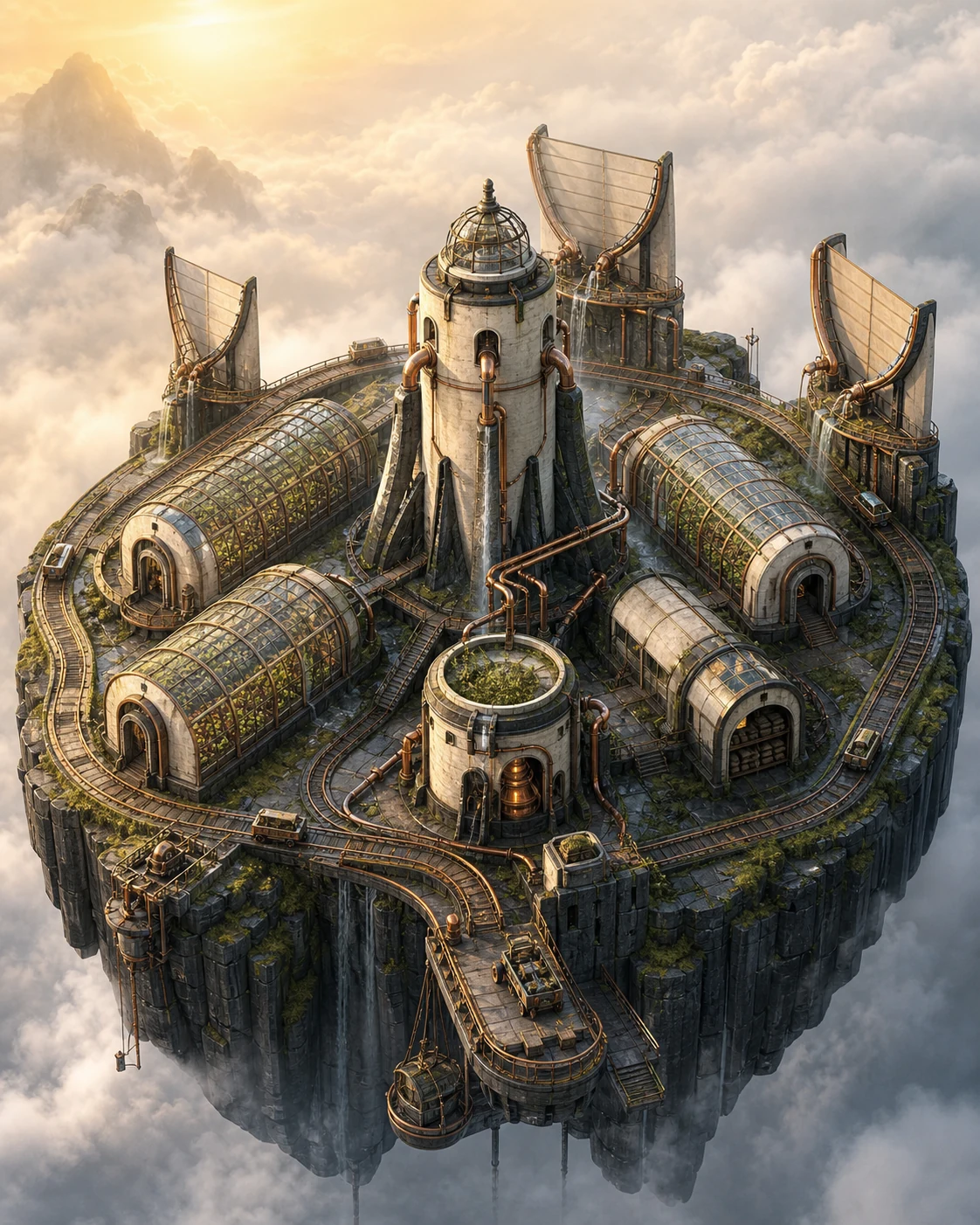
Validates that fog collectors, the filtration tower, three conservatories, heat recovery, and the rail loop remain a legible water-and-heat system in morning mist.Generated example

Cloudwell seed archive

Validates that fog collectors, the filtration tower, three conservatories, heat recovery, and the rail loop remain a legible water-and-heat system in morning mist.

View full image
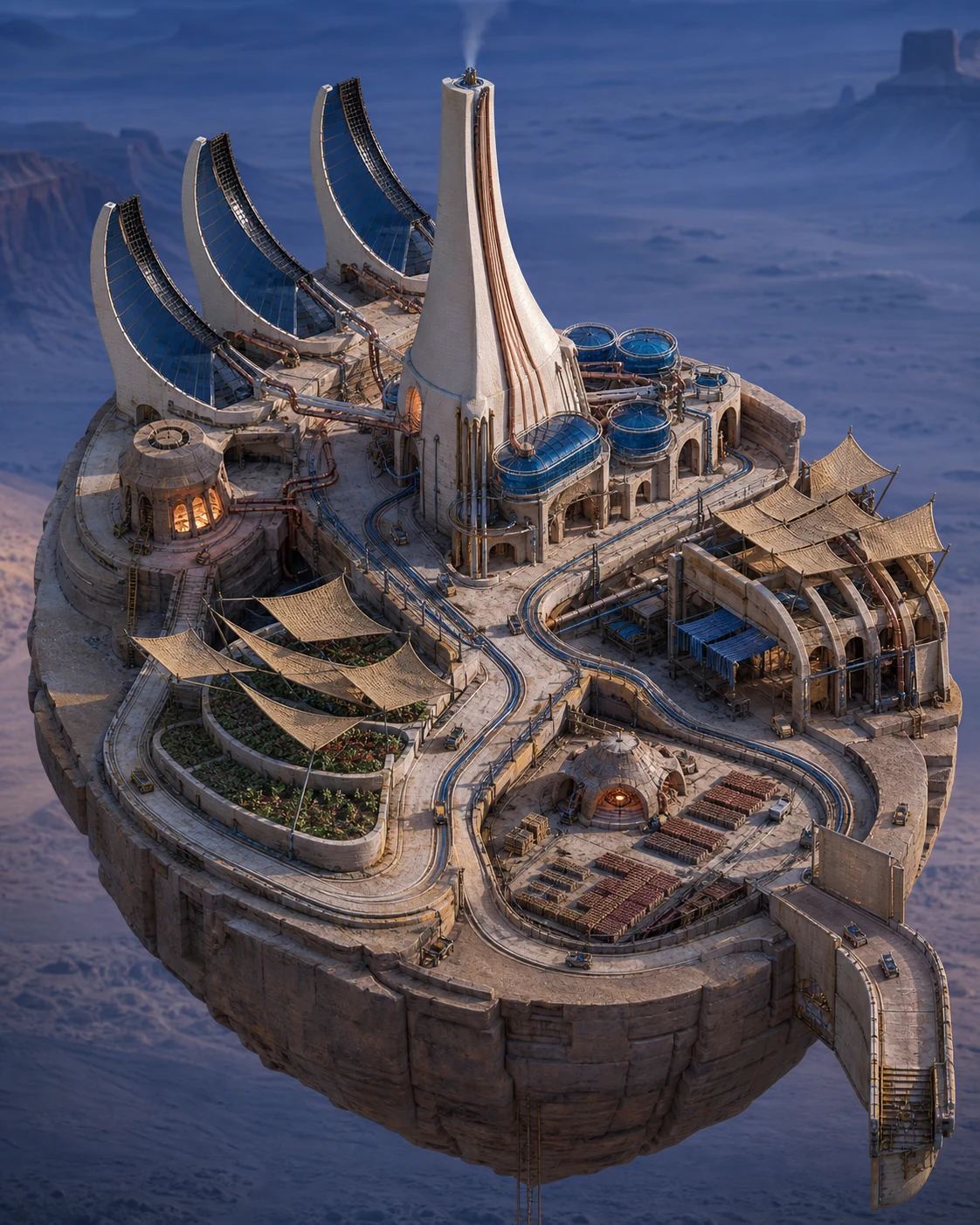
Validates that three thermal collectors, condensation, storage, weaving, gardens, and mineral-brick curing retain continuous function and credible support at blue hour.Generated example

Sunloom desert water foundry

Validates that three thermal collectors, condensation, storage, weaving, gardens, and mineral-brick curing retain continuous function and credible support at blue hour.

View full image
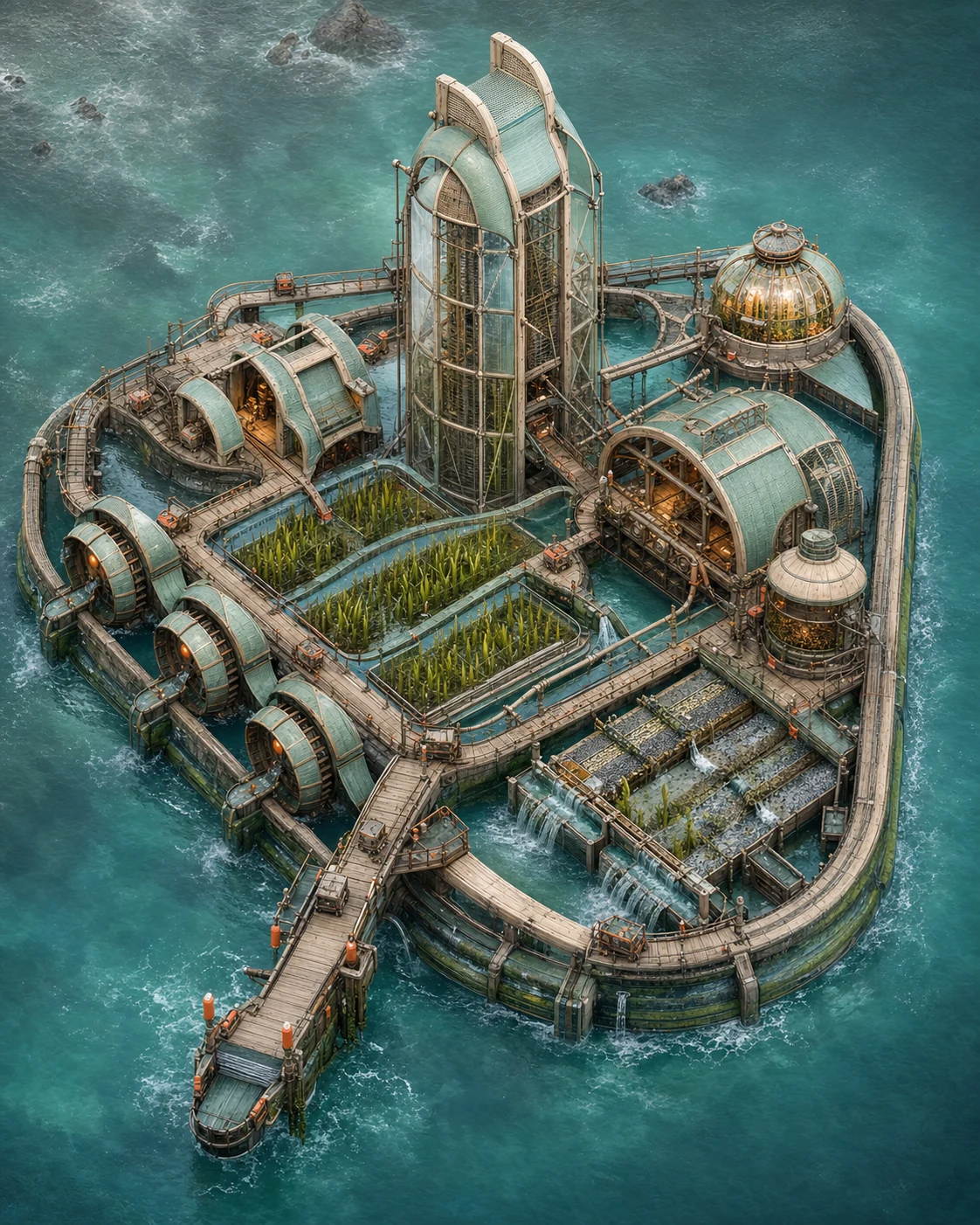
Validates that three tidal wheels, kelp beds, the drying tower, weaving atelier, wetland filters, and return cascades stay traceable in a salt-wet marine setting.Generated example

Tideglass kelp atelier

Validates that three tidal wheels, kelp beds, the drying tower, weaving atelier, wetland filters, and return cascades stay traceable in a salt-wet marine setting.

View full image

Reference images were generated for AI Prompt Card. Results vary by model, settings, seed, and the details you provide.

How to use it

From visual idea to usable image

  1. 1

    Complete the visual inputs

    State the subject, setting, use, format, and details that must remain or must not appear.

  2. 2

    Generate and inspect

    Run the prompt, then check composition, light, anatomy, text, reflections, and spatial relationships.

  3. 3

    Change one variable at a time

    Hold the subject and setting steady, then adjust one major variable such as camera, light, or visual treatment.

Prompt anatomy

What a reliable image prompt controls

Subject and action

Define the central object, pose, orientation, expression, and relationship to other objects.

Setting and space

Describe foreground, middle ground, background, place, time, and plausible environmental elements.

Composition and camera

Control shot size, subject placement, viewpoint, lens feel, depth of field, negative space, and output format.

Light, material, and color

Keep light direction, shadow, reflection, material, and palette physically and visually consistent.

Negative constraints and boundaries

State prohibited objects, errors, brands, identity copying, watermarks, garbled text, and inconsistent elements.

Frequently asked questions

Can I paste these prompts directly into an image generator?

Check the working-method label first. Direct-generation prompts can go into a compatible tool; prompt-builder templates should be completed in an AI assistant to produce the final image prompt.

Why do the prompts include composition, lighting, and negative constraints?

Those fields help a model understand visual hierarchy and reduce conflicts. Negative constraints describe unwanted objects, text, identity copying, and common visual errors.

What should I consider when using real people or reference images?

Confirm that you have the necessary rights and consent. Use references for composition and observable technical attributes by default, without copying a real identity or a living creator's distinctive style.

Inspiration source

This prompt is an original adaptation. The source X post appears below, and you can also open it directly on X.

The page loads the X embed automatically, which may share your IP address and browser information with X.
Open original on X

Loading the X post…

Keep exploring
View all image prompts